

Integrations and API
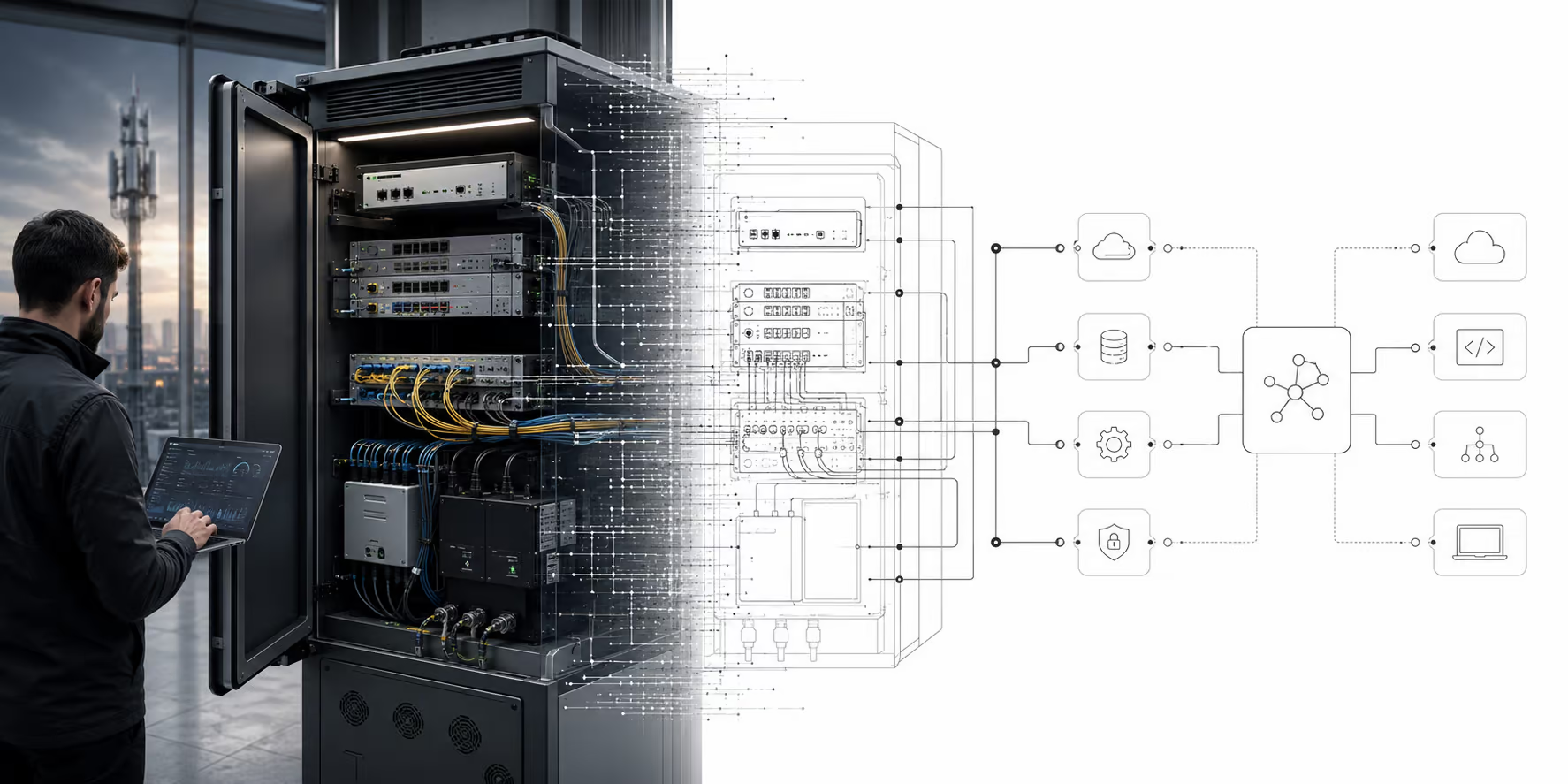
A mature infrastructure system does not exist in isolation. Billing, monitoring, CRM, HelpDesk, GIS, analytics, and internal services may all need data exchange. USERSIDE provides a controlled operational layer for these integrations.
A Shared Operational Layer
Integrations are most valuable when the core data model is disciplined. Network objects, equipment, customers, tasks, and warehouse operations should have clear relationships before they are exchanged with other systems.
USERSIDE can serve as the infrastructure operations layer that gives adjacent systems more reliable context.
API and Data Exchange
API scenarios may include synchronization with billing, monitoring, customer systems, internal portals, reporting tools, and automation scripts.
The important question is not only whether systems can exchange data, but which system owns which facts and how changes are controlled.
Reports and Management Signals
When operational data is connected, analytics becomes more than a separate spreadsheet. It can reflect workload, infrastructure state, recurring issues, material usage, and process discipline.